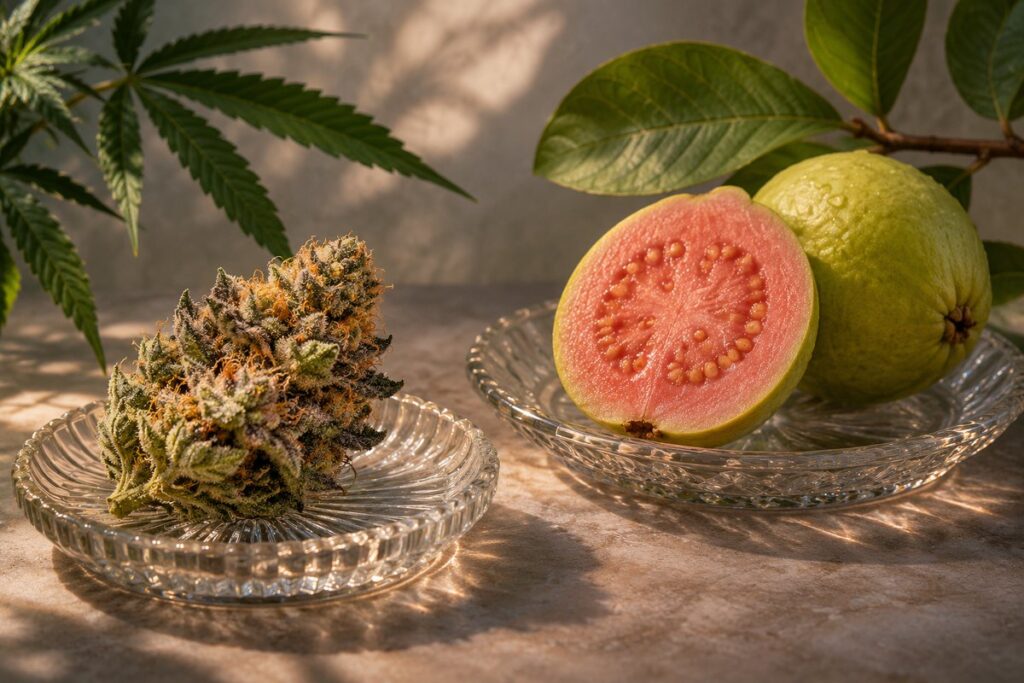
Lay two cannabis aroma reports side by side and they can seem to describe much the same material. Both list familiar terpenes near the top. Yet people smelling the samples might describe one as sharply citrusy and the other as savory. Is somebody using an eccentric vocabulary, or are the reports leaving something out?
Terpenes contribute to the smell of cannabis. What is harder to establish is whether the most abundant terpenes explain the differences that people actually notice between particular samples. To tackle that narrower question, chemists need two kinds of record for the same material. One records what escaped into the air. The other comes from the people who smelled it.
Thirty-one samples and two ways of sorting them
In a study published in ACS Omega, researchers compared 31 samples of ice hash rosin, a cannabis extract. They collected sensory descriptions and detailed chemical profiles. Some samples with quite different scents had similar profiles of major terpenes. The team went looking among the smaller chemical peaks for clues to the distinction between the sweet, savory and more familiar cannabis smells its panel reported.
Rosin is a particular material. Choosing a set of extracts made it possible to compare samples in a broadly similar form. It also puts a boundary around the result. The aromatic mixture hovering over an extract need not match the mixture hovering over a living flower or dried plant material. Even the descriptive grouping reflects the samples available to the team and the vocabulary agreed upon for that investigation.
A small peak can have a large smell
A gas chromatograph separates volatile molecules as they travel through a column. The instrument records each compound as it emerges, producing a series of peaks. Compounds with similar behavior can emerge close together. The researchers used two-dimensional chromatography to spread the mixture out further, which helps reveal compounds otherwise hidden in crowded parts of the recording. An earlier study pairing chemical measurements with human olfaction showed why this extra attention to faint signals can matter. The ranking of compounds by abundance can differ substantially from their ranking by estimated odor impact.
One reason is the detection threshold. Some molecules become perceptible at very low concentrations. Greater abundance of a different compound may therefore tell us surprisingly little about which one catches a person’s attention. The mixture matters, too. Knowing what a reference compound smells like by itself is helpful, but it does not tell us quite what a nose will make of it surrounded by dozens of neighbors.
Why the trail led to sulfur
Among samples with a particularly distinctive citrus note, the rosin team identified volatile sulfur compounds sharing a piece of chemical structure called a 3-mercaptohexyl group. The sensory description could have a sharp, fuel-like edge alongside the fruit. Wine researchers have long studied related molecules associated with grapefruit and passion-fruit notes. Work on odorous thiols in wine illustrates how challenging it can be to measure molecules people can smell in such tiny amounts.
Sulfur already had a place in the chemistry of cannabis aroma. A separate investigation of its skunky smell identified another family of sulfur compounds. Sharing an element does not give two molecules the same odor. A sensory panel may distinguish fruit from skunk quite readily even when a chemist sees reason to look for sulfur in both samples.
An illuminating follow-up would take a familiar aromatic mixture and ask a panel a very specific question: can they pick out the sample in which one candidate compound is absent? That sort of blinded comparison can test what an association across extracts only suggests. Meanwhile, the two reports that looked alike at the start have acquired a different meaning. They may describe the common aromatic background quite well. The detail that distinguishes one sample from its neighbor can live almost entirely below the first few lines.